The central government has clarified that there is no definite time-frame for approval and implementation of the 'Real Estate (Regulation & Development) Bill, 2012.
The bill was prepared to promote planned and healthy real estate development of colonies and apartments with a view to protect consumer interest and to facilitate smooth and speedy urban construction.
"In order to provide a uniform regulatory environment to enforce disclosure, fair practice and accountability norms and fast track dispute resolution mechanism in real estate transactions, the ministry of housing and urban poverty alleviation has drafted the 'Real Estate (Regulation and Development) Bill, 2012 in consultation with all stakeholders... Since necessary approvals for introducing the bill in Parliament have not been received, no time-frame can be assigned for its finalization at this juncture," states a press statement issued by the government.
The bill aims to establish a regulatory authority and an appellate tribunal to regulate, control and promote planned and healthy development and construction, sale, transfer and management of colonies, residential buildings and apartments.
As of now the Maharashtra Ownership of Flats (Regulation of the Promotion of Construction, Sale, Management and Transfer) Act, 1963 enables the state government to monitor timely completion of real estate projects. The draft cabinet note on the new bill has been circulated to all state governments for comments. A meeting with the state ministers dealing with the subject was also held recently.
"The state government has given its feed back to the central government regarding this bill and The state government
has held rounds of meetings with the municipal corporation office-bearers in the state. Considering the opposition from the real estate market, the bill is likely to get delayed," said a state government official.
Thursday, 13 December 2012

Real estate housing may get Industry status.....
Housing may get industry or infrastructure statusTNN | Dec 13, 2012, 02.40AM IST
PUNE: The state government has 'in principle' supported the recommendation by a technical group to make housing a part of infrastructure or declare it as an industry.
The 'technical group on estimation of urban housing shortage' of the country for the 12th Five Year Plan period (2012-17) has recently submitted its final report to the ministry of housing and urban poverty alleviation.
"The state government in principle has supported the suggestion. The final decision will soon conveyed to the central governmentIf housing becomes part of infrastructure or treated as industry, it will change the dynamics of urban development," said a state government official.
If housing becomes an industry, the rules and regulations would change; and if it is put under the infrastructure category, more central and state funds could flow to civic bodies.
According to the technical group, the total housing shortage estimated at the beginning of the 12th Five-Year Plan period is 18.78 million. Out of that, 10.55 million is in the economically weaker section (EWS) category and 7.41 million is in the low income group (LIG) category.
In Pune, the mid-city area, comprising 17 'peths' and surrounding areas, spanning over 147.85 sq km, is facing a shortage of 658,975 houses. To accommodate the burgeoning population, the municipal corporation will have to facilitate construction of over 30,000 affordable houses in the coming years. Failure to do so will result in rise of slums.
The new Development Plan (DP) for the old city areas has highlighted the need for affordable housing in the heart of the city.
According to the housing survey incorporated in the DP, in the 17 'peths' and six sectors that the city has been divided into, the requirement of the EWS is around 290,873 houses (that is 44.14% of the total housing requirements). The low income group requires 132,022 houses (20.03%), middle income group requires 172,977 houses (26.24%) and the higher income group needs 63,103 houses (9.58%).
PUNE: The state government has 'in principle' supported the recommendation by a technical group to make housing a part of infrastructure or declare it as an industry.
The 'technical group on estimation of urban housing shortage' of the country for the 12th Five Year Plan period (2012-17) has recently submitted its final report to the ministry of housing and urban poverty alleviation.
"The state government in principle has supported the suggestion. The final decision will soon conveyed to the central governmentIf housing becomes part of infrastructure or treated as industry, it will change the dynamics of urban development," said a state government official.
If housing becomes an industry, the rules and regulations would change; and if it is put under the infrastructure category, more central and state funds could flow to civic bodies.
According to the technical group, the total housing shortage estimated at the beginning of the 12th Five-Year Plan period is 18.78 million. Out of that, 10.55 million is in the economically weaker section (EWS) category and 7.41 million is in the low income group (LIG) category.
In Pune, the mid-city area, comprising 17 'peths' and surrounding areas, spanning over 147.85 sq km, is facing a shortage of 658,975 houses. To accommodate the burgeoning population, the municipal corporation will have to facilitate construction of over 30,000 affordable houses in the coming years. Failure to do so will result in rise of slums.
The new Development Plan (DP) for the old city areas has highlighted the need for affordable housing in the heart of the city.
According to the housing survey incorporated in the DP, in the 17 'peths' and six sectors that the city has been divided into, the requirement of the EWS is around 290,873 houses (that is 44.14% of the total housing requirements). The low income group requires 132,022 houses (20.03%), middle income group requires 172,977 houses (26.24%) and the higher income group needs 63,103 houses (9.58%).
Monday, 10 December 2012
Saarrthi Souvenir launch at Baner
New Launch At Baner Annex - Saarrthi Souvenir
A brand new project comprising of 1, 2 and 3 BHK apartments in 3 exclusive buildings viz, Titatinium having 2 & 3 BHK apartments, Platinum having 2 BHK apartments and Gold having 1,2 BHK apartments with all buildings of parking floor and 11 floors above.


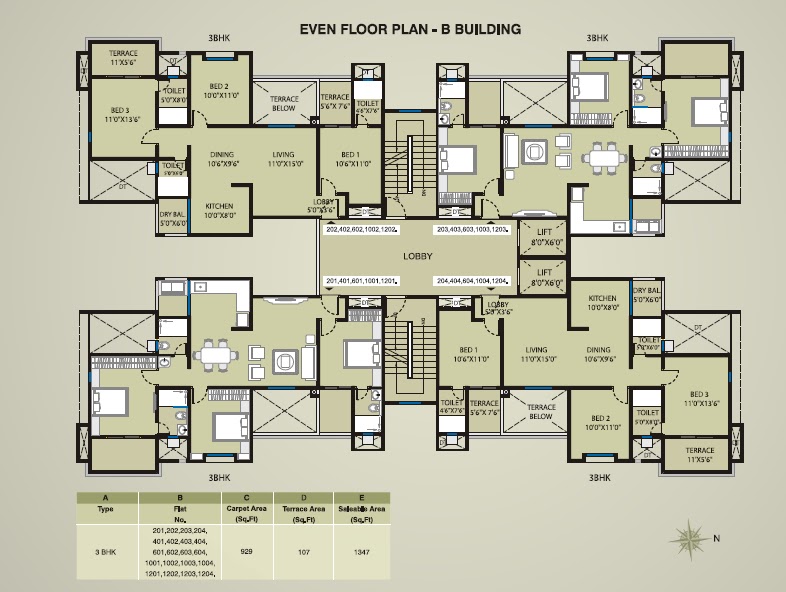


Launch price point is Rs.5100/- for Garden facing flats and 5000/- real facing flats. Floor rise applicable.
For more details please call me @ 9158400500 or 9823116000
Friday, 7 December 2012
Low cost housing
HOUSING
Redrawing
the Low-cost Model
Builders
are finding it difficult to make profits in the true low-cost housing space and
are, increasingly, moving their core business proposition to accommodate higher
price points.
In 2008, Jaithirth ‘Jerry’ Rao set up Value and Budget Housing Corporation (VBHC) to build low-cost houses — of below 10 lakh each — for the urban poor. Four years on, VBHC has completed the first phase of its maiden project in Bangalore, and sold 400 apartments. However, it has marginalised the low-cost premise it started out with. Low-cost houses make up only 15% of a VBHC project; 75% of the units cost 13 lakh each and the remaining 10% cost 18 lakh each. Market players term these higher price points — which target those seeking bigger, better houses and having the ability to pay a little more — as ‘affordable housing’. Increasingly, companies in the stated business of low-cost housing are operating, in varying degrees, in these pricier spaces. For example, Tata Housing defines low-cost as below 10 lakh and affordable as 15 lakh to 40 lakh, and has an equal mix in its projects. But PS Jayakumar of VBHC says this is mere semantics. “For us, low-cost and affordable are interchangeable terms,” says the managing director of VBHC. “We target salaried people who are willing to invest a little more. It is not for people below the poverty line or at subsistence levels.” Such an evolving price-volume split, and the splitting of hairs over the definition of low cost, is a challenge and reality for builders in this space. Rising input costs, and the extraneous costs related to real estate in India, is making a pure low-cost project commercially unsustainable. This is pushing builders to adopt a hybrid model — a mix of pure low-cost housing and affordable housing. The larger the ticket size, the higher the profit margins. There’s also a pull factor. Buyers are showing a greater inclination towards buying lowcost houses for investment purposes, as opposed to living in them, creating upward pressure on prices. “About 30%-40% is being picked up by investors in these projects,” says Subhankar Mitra, head, strategic consulting (west), Jones Lang LaSalle India, a real estate consultancy, adding that the very idea of low-cost housing is under threat.
Hybrid Model
In spite of moving up the price curve, the positioning of builders hasn’t changed: it is still low-cost. Take Tata Housing, which launched a 100% subsidiary in 2010 called Smart Value Homes to build houses in the 5 lakh to 40 lakh range. “The lowincome tag got them the buzz, but all their projects are mixed,” says Vikram Jain, lead, low-income housing practice, Monitor Group, a management consulting firm. Smart Value Homes has two brands: Shubh Griha (houses below 10 lakh) and New Haven (between 15 lakh and 40 lakh). According to Brotin Banerjee, MD and CEO of Tata Housing, both brands co-exist in most projects; some, though, are only under the New Haven brand as the land prices there are higher. “Our projects are usually spread across 40-50 acres and we give them (customers) townships,” he says. “We don’t want our low-cost customers to miss out on the community experience just because their houses cost less.” Jayakumar of VBHC agrees. “When poor and rich communities stay together, security issues are better than communities segregated from each other,” he says. “Our aim is not to build ghettos but vibrant communities where social balances are useful, apart from the economic compulsion of the project.” More groups are looking to enter this space, including Mahindra and TVS. Both declined comment as their projects were in the conceptual stage. But Jain of Monitor, who has spoken to both groups, says Mahindra is focussing on the low-cost segment and TVS on the affordable-housing segment.
Lack Of Standardisation
The main issue before developers is how to keep costs down — and, by extension, prices. Jayakumar expects the mixed model to deliver an operating margin of 15%-20%, while Banerjee pegs it at 12%- 15%, adding that a builder needs to achieve “economies of scale” to succeed in this format. A pre-requisite for economies of scale is standardisation: like uniformity in sizes, in design. But building laws — for example, built-up area and open-space norms — vary between cities, even across localities in a city. “It increases our cost and we cannot derive the benefit of economies of scale,” says Jayakumar. Sachin Kulkarni, managing director of Vastushodh, says the current rules and operating environment disincentivise a pure low-cost model. “The bribe we pay for premium-housing projects is the same as for our affordable category, with the same amount of paperwork,” he says. Vastushodh, which works on a hybrid model, has 12 projects in Pune and is planning to enter Mumbai. Kulkarni says approvals take at least six months. “The longer this process, the higher our costs — our capital assets remain idle, gathering interest,” he says. Similarly, for its maiden project in Bangalore, VBHC had to wait 18 months for approvals. “We can reduce our costs by 20% if the approval process is shortened,” says Jayakumar, adding, more states need to follow the Rajasthan lead of single-window clearance for affordable-housing projects.
Investor Inflation
The low-cost segment targets
households with a monthly income
of 15,000-20,000; the affordable segment, 25,000-50,000 a month. The supply
of low-cost units is not only being challenged at the builder end, but also, unintentionally, by buyers such as Manoj Kurey. This 52-year-old medical representative in Pune, who earns 4.5 lakh a year, recently bought a oneroom set in a Vastushodh project in Yerwada for 4 lakh. “I bought it for investment purposes,” says Kurey, who lives with his family in a two-BHK in central Pune. Kulkarni of Vastushodh says investors have made offers to him to buy an entire building and sell once prices appreciate, but that “we do not encourage investors and prefer selling to end-users”. According to Kulkarni, “not more than 10%” of buyers of such projects would be investors. Even among them, he adds, many are deferred users. Mitra of Jones Lang says investor interest in the low-cost space, which is being fuelled by low ticket prices, is counter-intuitive to the idea this segment stands for. “The pool of investors is very large, and they are pushing up prices and blocking out end-users. The objective of low-cost housing is lost,” he says, adding the government should do more, in terms of checks and balances, to support private initiatives and ensure supply reaches genuine beneficiaries. There are few pure low-cost players left. Even those left are raising their floor prices. For example, Ahmedabad-based premium developer Foliage, entered this business in 2008, with apartments of Rs 3-7 lakh. Today, its price range is 5-11 lakh. “In another five years, it will be 7-12 lakh, depending on land prices,” says Nehal Shah, CEO of Foliage. According to VBHC, between 2010 and 2012, the price of steel increased by 52%, cement 82% and labour costs 55%. Still, Shah finds the low-cost proposition compelling. “My premium segment does not subsidise Navjivan (its low-cost offering). They are two separate entities and I find the low-cost model sustainable,” he says. “We invested 4 crore in the first project and have an RoI (return on investment) of 60%.” But Foliage is an exception. Most players, seeking greater operational and financial stability, prefer the middle ground. And that is the new normal for the low-cost space.
This article was published in Economic times in Mumbai on 6th Dec 2012.
The above toipc if the the most talked one across India. The developers are targeting only the 4-5 % people who pay taxes. Who is bothered about the the remaining 95%. Can they really afford any house below 15 lacs. You see everywhere in Pune the minimum price of a 1 BHK is not below 35 lacs in a good upcoming suburb. But there are some available in remote places like Talegaon, Phursungi, foot hills of Sinhagad, Ranjangaon but who is buying them? Again retail investors, localities in that area, guy who works in city limits will find it very difficult to commute from remote places.
The basic raw material which is the "Land" the real "Real Estate" is very costly and it is not becoming any cheaper. The land which is in Government's hands, some portions of it should strictly be reserved for Low cost and affordable housing only. Otherwise it is going to be very difficult to handle the situation in the near future.
Regards,
Hitendra
Friday, 30 November 2012
Verifying Title of a property
People invest millions to buy properties, but several of them do not check the title of the property correctly and land in financial mess and avoidable litigation Checking the title of immovable property is a complex job because Indian Property Laws are not codified in a single law book, but they are scattered in different statutes. Even an accidental omission to take cognizance of any of these provisions will prove costly in the long run. Some of the important points to be checked before buying immovable property as under:
Seller to be owner
Only an owner can sell the property and so the buyer should deal with the owner. Inspection of documents such as property card, share certificates by co.operative societies, 7/12 extracts etc. will help the buyer to identify the owner.
If the seller cannot personally handle the sale transaction, he can appoint a constituted attorney. Under Section.33 of the Indian Registration Act, such a Power of Attorney should be attested before a Sub Registrar, if executed in India and if it is executed outside India, it should be attested by a Consular Officer or a Notary Public in that country.
Capacity of seller
If the seller has purchased the property with his money, he can sell it. If he is holding the property as a nominee he cannot sell without the consent of all legal heirs because the law is well settled that nominee is not the owner, but holds the property as a trustee. If seller claims ownership by virtue of a Will, it is advisable to insist on Probate. If the seller is a legal heir of a deceased owner, consent of all legal heirs is necessary. If the buyer has any doubt about the capacity of the seller, insist on Letters of Administration or such authority issued by a court.
Company as seller
If the seller is a company insist on a resolution of board of directors. The resolution should reflect the decision of the company to sell the property and authorize the signatory to sign the sale documents. The person thus authorized should sign the documents himself and not authorize another person to execute documents because a delegate cannot delegate. Under s.293 of the Companies Act, if the company sells whole or major part of the company's property, consent of the general body is necessary.
Many companies mortgage properties to avail of loan. Under s.124 of the Companies Act, all such charges should be registered with the Registrar of Companies within thirty days. A registered charge is a notice to the public. So, if the buyer buys company's property, he should check Register of Charges kept by Registrar of Companies.
Partnership firm as seller
When a partnership firm is the seller, all partners should sign the sale deed. In routine matters any one partner can bind the firm, but under s.19(2)(g) of Indian Partnership Act, the implied authority given to a partner does not empower him to sell immovable property of firm.
Minor's rights
When minor's rights are involved in a property, the buyer should insist on court's order permitting transfer. Courts will ensure that the money received by selling minor's property is used for the benefit of the minor.
Lunatic's rights
A mentally ill person or a lunatic is incapable of taking correct decisions. He cannot sign contracts. Therefore, if a lunatic person has share in a property, an application has to be filed in court to appoint a manager for the mentally ill person and the manager thus appointed by the court can sign documents on behalf of the lunatic.
Trust, Wakf Property
If the property is owned by a public trust, prior permission of Charity Commissioner is necessary. If the property is owned by Wakf, permission of Wakf Board is mandatory. In the absence of these permissions, the transaction may be declared as null and void.
Foreign companies
If the seller is a foreign company or corporate body, prior permission of Reserve Bank of India is necessary because under Foreign Exchange Management Act, foreign corporate bodies can buy or sell immovable property in India only with the permission of Reserve Bank.
NRI as seller
If an NRI or PIO (person of India origin) is the seller, please insist on NOC from Income Tax Dept. under s.195 of Income Tax Act. This will ensure that the purchaser does not receive any demands for capital gain tax from Income Tax Dept.
Co.operative society as seller
S.64 of Maharashtra Co.operative Societies Act prohibits a co.operative society from selling its assets and dividing the funds among its members. Therefore, avoid such deals.
Premises in a co.operative society
If the premises you propose to buy is situated in a co.operative society, there will be additional restrictions.For example,under s.29(2)(a) of the Maharashtra cooperative societies Act, a person can sell the property only after he holds the same for minimum one year. The transfer of shares will be subject to the byelaws of the co.operative society.The buyer's title becomes clear only after the co.operative society transfers the shares and admits the buyer as a member of the society.
Premises in a constructed premises
If the buyer is buying a constructed premises like flat, row house etc. in a constructed premises, please insist on occupation certificate before taking possession. If the building does not have occupation certificate, it may lead to several complications in future.
Sale by insolvents
In India there are two laws governing insolvency. They are Presidency Towns Insolvency Act (for Mumbai, Calcutta and Chennai) and Provincial Insolvency Act (for rest of India). Under the former law, when a person is declared as an insolvent by a court, his entire property vests in the Official Assignee and the owner does not have the right to sell his property. Further, the Official Assignee is empowered to examine the legality of all transfers made by the insolvent during the two years preceding the court's order.
Involvement of govt. agencies :
Government agencies like Collector, MHADA,CIDCO etc .lease land for construction of buildings. If the buyer is buying premises in such buildings, he should find out the conditions stipulated by those agencies for transfer. Generally there may be conditions for payment of premium to those agencies.
Use of premises:
A residential flat is meant for residential purposes and a garage is meant for parking motor vehicles. Therefore, the buyer should be clear about the purpose for which he buys the premises. Illegal change of user of premises is an offence and may lead to future problems.
Buying land :
In Maharashtra there are several restrictions on purchase of land. Agricultural land can be purchased only by an agriculturist. If the buyer gives false declarations at the time of purchase, the problems will be multiplied. Land owned by scheduled castes, tribes, nomadic tribes etc. can be bought only with prior permission of competent authorities. In a city like Mumbai land is reserved for specific purposes and the buyer must be aware of the use of land.
Lis Pendens :
Under s.52 of the Transfer of Property Act when any legal proceeding involving title of a property is pending in a court, none can sell the property till the court decides the issues. In Mumbai pendency of such legal proceedings can be registered with the sub registrar under s.18 of the Indian Registration Act. This is called Lis Pendens. Before concluding the transaction the buyer should arrange to conduct a search of land records.
Stamp duty :
After completing other formalities the parties should enter into a sale deed to buy the property. Stamp duty should be paid on the basis of the market value fixed by government or the agreement value, whichever is higher.
Registration :
Certain special laws exempt documents from compulsory registration, otherwise all documents for transfer of property should be registered with sub registrar.
The above list is not all inclusive. Additional requirements may vary from case to case.
NOTE :
If he/she is holding the property as a nominee he cannot sell without the consent of all legal heirs
All documents for transfer of property should be registered with sub registrar
Pimpale Nilakh
Pimpale Nilakh is an old part of PCMC area which is so within the city very close to Aundh but yet not picked up as a very hot location compared to Balewadi and Baner. Why?? Because of roads and bridge connectivity still not fully ready. The vital link to the new Baner-Balewadi-Wakad bridge link is yet to be completed (only 700 meters remaining) which is still under development in PCMC portion. The DP road is in use for the last 4 years and the bridge is ready and used from last one year but one has to go around Pimpale Nilakh village and cross over to Baner-Balewadi. Once this all is complete this area will come in limelight and will command same rate as Balewadi and Baner area. Two Luxury projects viz. Kolte-Patil group's 24K Glitterati and Water's edge are being developed in this location and both will be fully possessed by June 2013. The mass transit road from Aundh to Ravet via Dange chowk is under expansion, which is a vital link which connects to Highway and the E-way and will take another 6 months to be fully operational.
The average rates for average projects are in the range of 4800-5500/- per sqft. The luxury projects command basic rates from 6000-6500/- per sqft. Once the connectivity is complete the rate will further appreciate by 500-800/- per sqft. The future looks very good as lot of vacant lands are in possession of large developers which is close to about 60-70 acres ready to be developed in quality projects, which will further consolidate this location with very good livable residential projects with self content facilities like essential shopping, entertainment, schools etc.
So act now and look at this location seriously and of course do not regret later.
Hitendra
9158400500
hitendra2309@gmail.com
The average rates for average projects are in the range of 4800-5500/- per sqft. The luxury projects command basic rates from 6000-6500/- per sqft. Once the connectivity is complete the rate will further appreciate by 500-800/- per sqft. The future looks very good as lot of vacant lands are in possession of large developers which is close to about 60-70 acres ready to be developed in quality projects, which will further consolidate this location with very good livable residential projects with self content facilities like essential shopping, entertainment, schools etc.
So act now and look at this location seriously and of course do not regret later.
Hitendra
9158400500
hitendra2309@gmail.com
Wednesday, 21 November 2012
Pune real estate report
According to the latest reports from JLLM and Knight Frank, all segments of the real estate sector in the city have shown signs of stability and consolidation. Commercial real estate has witnessed some more consolidation compared to last year, thanks to the expansion of services sector and significant movement in retail, while luxury housing is making a comeback. Real estate sector observers said the subdued economic situation has led to lower interest in office space, but there has been some addition to the space absorbed by the services sector. On the retail front, too, there have been signs of consolidation, as organised retail is seeing a major shift from standalone locations to large malls which ensure better footfall. JLL said no new retail mall space was completed in October and rents and capital values remained stable over the month.
Residential segment saw impressive absorption as the market is marked by affordable prices in comparison with the rest of the metros, realty research firm Knight Frank said. The firm said that close to 130,000 units have been launched in Pune since 2009 and market vacancy levels are relatively healthy at 21%, compared to cities like Mumbai and National Capital Region, where vacancies range significantly over 30%.
According to Knight Frank, “The emergence of IT/ITeS sectors in Pune, in tandem with various manufacturing units being set up in the city and surrounding areas over the last decade, has resulted in the expansion of the real estate market in all directions. Ample availability of land in eastern and western peripheral locations ensures that the new residential product is well within the affordability criteria of their catchments.” The Pune market is largely end-user driven and as such not subject to much volatility, the firm said.
Destinations in Pune to invest in now:
Hinjewadi in Pune is expected to witness over 90 per cent rise in housing prices over the next five years, a report by property firm Knight Frank has revealed. Ulwe in Navi Mumbai, Wadala and Chembur are expected to generate the highest returns for residential real estate investors over the next five years, the report said.
Followed by Hinjewadi (rank7th), even Tathawade (rank 8th) and Ravet (rank 9th) are expected to grow close 90% in next 5 years.
In fact, seven of the top 9 spots on the list of 13 areas are occupied by localities in Mumbai and Pune. While rates in Ulwe are expected to rise 145% in five years, in Wadala and Chembur, the hike is likely to be 133% and 125%, respectively.
The report seeks to identify areas that will develop because of factors such as job creation, infrastructure development and lifestyle change. “We identified 100 cities using banking penetration, hotel room demand, and air passenger traffic as surrogates for business activities. For infrastructure development, the current and proposed investment in infrastructure were taken as proxies.
___________________________________________________________________
__________________________________________________________________
The work force in Hinjewadi is between 150000 to 175000 people approx which is expected to grow with phase -III of IT park and phase-IV still to operate fully. Also the Auto industry in Talegaon, Chakan areas still growing, the entire west and north Pune is the future growth corridor or Pune. By saying this East Pune doesnt lag behind but west will be the prefered destination which will be close to the Chakan airport, the Navi Mumbai airport and ofcourse Mumbai region.
So guys act fast and invest now or repent later.
Call for further more details and which projects to focus.
Always at your service
Regards
Hitendra
9158400500
9823116000
Residential segment saw impressive absorption as the market is marked by affordable prices in comparison with the rest of the metros, realty research firm Knight Frank said. The firm said that close to 130,000 units have been launched in Pune since 2009 and market vacancy levels are relatively healthy at 21%, compared to cities like Mumbai and National Capital Region, where vacancies range significantly over 30%.
According to Knight Frank, “The emergence of IT/ITeS sectors in Pune, in tandem with various manufacturing units being set up in the city and surrounding areas over the last decade, has resulted in the expansion of the real estate market in all directions. Ample availability of land in eastern and western peripheral locations ensures that the new residential product is well within the affordability criteria of their catchments.” The Pune market is largely end-user driven and as such not subject to much volatility, the firm said.
Destinations in Pune to invest in now:
Hinjewadi in Pune is expected to witness over 90 per cent rise in housing prices over the next five years, a report by property firm Knight Frank has revealed. Ulwe in Navi Mumbai, Wadala and Chembur are expected to generate the highest returns for residential real estate investors over the next five years, the report said.
Followed by Hinjewadi (rank7th), even Tathawade (rank 8th) and Ravet (rank 9th) are expected to grow close 90% in next 5 years.
In fact, seven of the top 9 spots on the list of 13 areas are occupied by localities in Mumbai and Pune. While rates in Ulwe are expected to rise 145% in five years, in Wadala and Chembur, the hike is likely to be 133% and 125%, respectively.
The report seeks to identify areas that will develop because of factors such as job creation, infrastructure development and lifestyle change. “We identified 100 cities using banking penetration, hotel room demand, and air passenger traffic as surrogates for business activities. For infrastructure development, the current and proposed investment in infrastructure were taken as proxies.
___________________________________________________________________
| Rank | Destination City | City | Avg price 2012 | Extd price 2017 | Appreciation | Years to double prices |
| 1 | Ulwe | Mumbai | 4,000 | 9,800 | 145% | 3.4 |
| 2 | Wadala | Mumbai | 15,000 | 35,000 | 133% | 3.8 |
| 3 | Chembur | Mumbai | 12,000 | 27,000 | 125% | 4 |
| 4 | Noida Extension | Delhi-NCR | 3,200 | 6,760 | 111% | 4.5 |
| 5 | Dwarka Expressway | Delhi-NCR | 4,900 | 10,200 | 108% | 4.6 |
| 6 | Medavakkam | Chennai | 3,800 | 7,700 | 103% | 4.9 |
| 7 | Hinjewadi | Pune | 4,000 | 8,000 | 100% | 5 |
| 8 | Tathawade | Pune | 4,300 | 8,500 | 98% | 5.1 |
| 9 | Ravet | Pune | 3,950 | 7,800 | 97% | 5.1 |
| 10 | Hebbal | Bengaluru | 4,250 | 8,230 | 94% | 5.3 |
| 11 | Pallikarnai | Chennai | 4,200 | 8,100 | 93% | 5.4 |
| 12 | Wakad | Pune | 4,500 | 8,600 | 91% | 5.5 |
| 13 | KR Puram | Bengaluru | 3,245 | 6,200 | 91% | 5.5 |
__________________________________________________________________
The work force in Hinjewadi is between 150000 to 175000 people approx which is expected to grow with phase -III of IT park and phase-IV still to operate fully. Also the Auto industry in Talegaon, Chakan areas still growing, the entire west and north Pune is the future growth corridor or Pune. By saying this East Pune doesnt lag behind but west will be the prefered destination which will be close to the Chakan airport, the Navi Mumbai airport and ofcourse Mumbai region.
So guys act fast and invest now or repent later.
Call for further more details and which projects to focus.
Always at your service
Regards
Hitendra
9158400500
9823116000
Subscribe to:
Posts (Atom)